

Before European Settlement
Before British settlement, the area now known as Harrington was home to the Biripi people, who had lived along the Manning River and its coastal environment for thousands of years. Their lives were deeply connected to the land and waterways, which provided abundant food sources such as fish, shellfish, eels, and waterbirds, as well as plant foods from the surrounding bushland. The river and ocean were not only vital for sustenance but also held significant spiritual and cultural meaning, featuring in stories, ceremonies, and songlines that linked the Biripi to their ancestors and neighbouring nations. Seasonal movements followed the natural cycles of fishing, hunting, and gathering, with well-established knowledge of tides, weather, and ecological patterns ensuring sustainable living. The Biripi’s stewardship of the land maintained a rich and balanced environment long before European explorers arrived in the early 19th century.
Summary:
- Pre-1800s – The Biripi (Biripi) people inhabit the Manning River and coastal region, relying on fishing, hunting, and gathering, with strong spiritual and cultural ties to the waterways.
19th Century
In the 19th century, Harrington began its transformation from an Aboriginal cultural landscape into a small but industrious maritime settlement shaped by the natural resources and navigational challenges of the Manning River. Following John Oxley’s 1818 survey, in which he named the area after the Earl of Harrington, European settlement gradually increased, with early residents drawn by the rich fishing grounds, fertile river flats, and the potential for coastal trade. By the mid-1800s, the settlement was officially established, and the river became a hub for shipbuilding, fishing, and coastal trade. Shipbuilding became Harrington’s defining industry during this era, with the Pelican Shipyard, operated by the Newton family between 1846 and 1878, producing around 30 ocean-going vessels including schooners and brigantines, making it one of the largest shipyards in the Southern Hemisphere. These ships carried timber, agricultural produce, and supplies along the coast and beyond, linking Harrington to major ports.
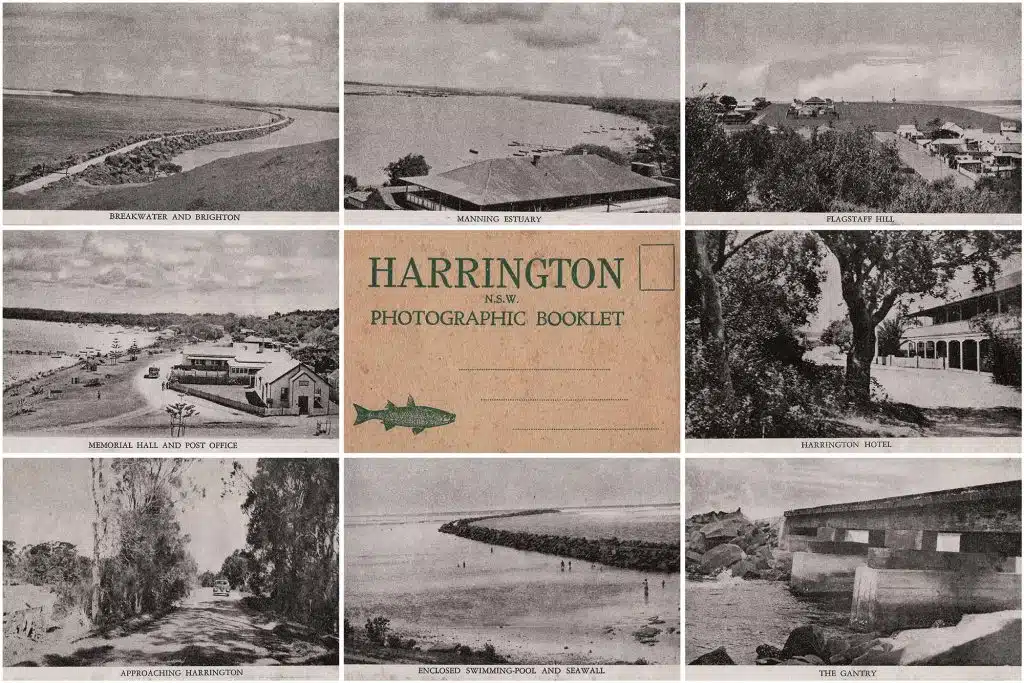
The hazardous sandbar at the Manning River entrance necessitated the construction of a pilot station on Pilot Hill in the 1860s, where skilled maritime pilots guided vessels safely through shifting currents and treacherous tides. As shipping increased, the need for safer navigation led to the commencement of the Harrington breakwall in 1894, protecting the harbour from storms and stabilising the river mouth. By the time Harrington was officially proclaimed a village on 26 September 1896, it had earned a reputation as a vital coastal hub, sustained by shipbuilding, fishing, and trade, and marked by the resilience and skill of its seafaring community.
Summary:
- 1818 – Explorer John Oxley surveys the Manning River and names the location “Harrington” after the Earl of Harrington.
- 1846–1878 – The Pelican Shipyard operates, producing about 30 ocean-going vessels, making it one of the largest shipyards in the Southern Hemisphere at the time.
- 1853 – Harrington settlement formally established.
- 1860s – Pilot Station is built on Pilot Hill to guide ships over the hazardous Manning River bar.
- 1894 – Construction begins on the Harrington breakwall to protect the river entrance.
- 26 September 1896 – Harrington is officially proclaimed a village.
20th Century
Throughout the 20th century, Harrington experienced significant changes as it transitioned from a bustling maritime port to a quieter coastal community shaped by broader economic and social shifts. In the early decades, the town’s economy remained anchored in fishing, oyster farming, and small-scale coastal trade, with the Manning River continuing to serve as a vital transport artery for goods and people. However, advancements in road infrastructure and the increasing availability of motor vehicles gradually reduced the town’s dependence on river shipping, as trucks began to carry freight more efficiently to and from larger regional centres like Taree and beyond. During World War II, the strategic coastal location of Harrington brought increased military presence, with patrols and surveillance aimed at protecting Australia’s eastern seaboard from potential maritime threats. Despite these global tensions, the post-war period saw Harrington maintain its strong connection to the sea through continued fishing and growing recreational activities. From the 1970s onwards, the town began attracting holidaymakers and retirees drawn to its natural beauty, peaceful lifestyle, and access to the river and ocean. Caravan parks and holiday homes sprang up along the foreshore, while local efforts to improve amenities, including picnic areas and walking tracks, helped boost tourism. This period also saw a shift in the town’s identity as the community balanced its traditional maritime industries with a burgeoning leisure and retirement economy. By the late 20th century, Harrington had evolved into a close-knit community where the legacy of its shipbuilding and fishing past remained visible, even as new residents and visitors contributed to a more diverse and service-oriented local economy.
Summary:
- Early 1900s – Fishing and coastal trade form the backbone of Harrington’s economy.
- 1920s–30s – The town remains small and close-knit, with maritime work and river transport central to daily life.
- 1940s – WWII sees increased coastal patrol activity; the Manning River remains important for local industry.
- 1950s – Road transport grows, reducing reliance on river shipping; tourism begins to emerge slowly.
- 1966 – Census records 543 residents, reflecting modest growth.
- 1970s–80s – Tourism expands with caravan parks and holiday homes, while fishing remains important.
21st Century
In the 21st century, Harrington has grown into a vibrant blend of coastal holiday destination and relaxed residential community, while still embracing its maritime heritage. Expansive housing developments, such as Harrington Waters, have attracted a wave of retirees and sea-changers, boosting the population and driving local business growth. Tourism continues to flourish, supported by improved foreshore parks, walking tracks, and fishing facilities that highlight the town’s natural beauty and connection to the Manning River. In 2020, the opening of the Harrington Heritage Riverwalk added a cultural dimension to the visitor experience, with interpretive signage sharing stories from the town’s Aboriginal heritage, shipbuilding era, and fishing traditions. The town now balances modern amenities with its small-town charm, offering a lifestyle centred on recreation, community, and the spectacular coastal environment, ensuring that Harrington’s history remains a celebrated part of its identity in a changing world.
Summary:
- 2020 – Opening of the Harrington Heritage Riverwalk to celebrate local history and culture Learn more about the riverwalk: https://www.harringtonandsurrounds.com.au/harrington-heritage-riverwalk/
- 2021 – Census records 3,381 residents.